
Are You Thinking of Writing Your First (or Next) Book?
You have something to say. Maybe you have years of experience helping people, a story you keep returning to, or a fictional character who refuses to leave you alone. You would love to turn it into a book. Your first - or your next.
But how do you get your book written - when there seems to never be enough time?
Here is a practical way to write a GOOD book with AI while keeping your ideas and your voice at the centre.
At a glance: How to write a GOOD book with AI
- Find your direction: decide who your book is for and what you want it to give them.
- Build the structure: turn your notes into an outline you can question and improve.
- Make the writing yours: revise with your own voice, experience and imagination.
- Check before you publish: verify facts, protect privacy and review the publishing requirements.
AI can help with the work. You remain responsible for the decisions and the final book. Below, I share practical prompts and what I learned while writing my own books.
What makes a book GOOD?
For me, a good book gives its intended reader something worth their time.
I want them to feel something.
That might sound like:
- "Finally I understood how this works!" or
- "Wow, this was interesting, I learned something new and exciting!" or
- "This story is so good, I cannot put the book down", or
- "Yes, that's exactly how I feel/felt/want to feel" or
- "Wow, this is something I want to experience, too".
And one polished paragraph alone cannot do all of that.
And sometimes, your book can be an invitation for the reader to come closer to the author, to buy another book, related merchandise, or services like coaching or therapy.
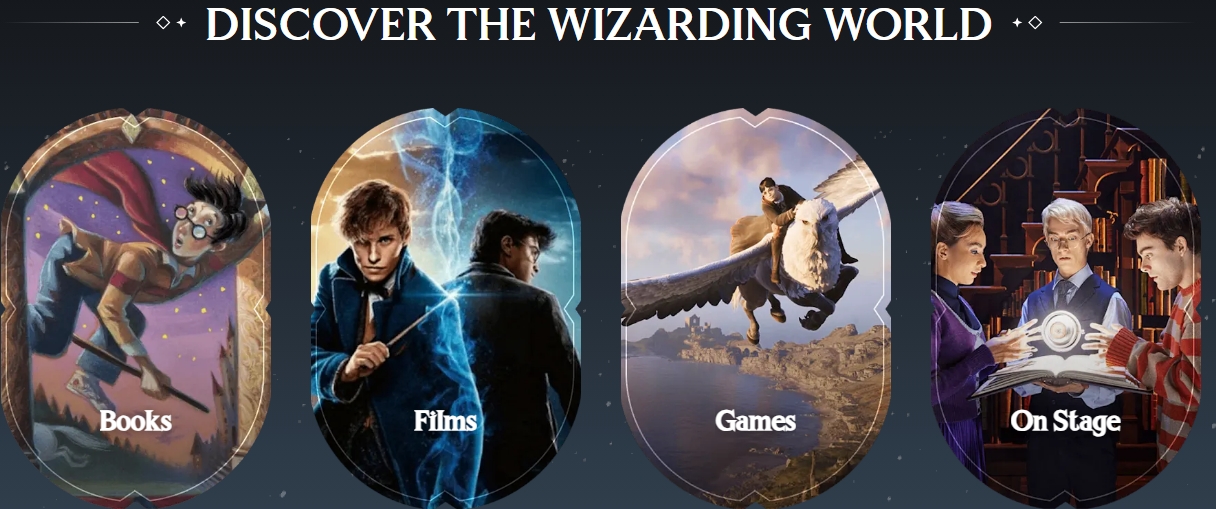
The famous "Harry Potter" book series is a classic example of such a good book that has made it to all of this and even to Wikipedia.
Before we start working on the three parts of your book, or about perfect title or cover, you need to make a decision: Should you use AI - or not - and write 100% human. Both are legitimate choices, as AI is here to stay,
AI or not AI, that is the Question...
Much is being written whether writers should use AI or not, whether it is "human" or "artificial". This is a matter of opinion, but the trend is obvious.
Whether AI use is permissible or desirable can depend on many factors, e.g. whether your writer's association allows it, whether you may qualify for an award, your personal conviction, your experiences, your publisher or agent (if you have any). This article writes from the assumption that you want to self-publish your book, most commonly with Amazon KDP (not just Kindle books start here). Below find some general options that you may find helpful.
1. AI Tools to help with the basics of writing a good book
Most writers already use AI tools to help with structure, grammar and spelling checks, and it is fast and highly efficient and can point out all areas of your book where you may want to consider improvements.
2. AI tools to write the whole book
There are many books published on Amazon that are written wholly or substantially with AI. Amazon KDP asks publishers to disclose AI-generated text, images and translations. Its rules distinguish AI-generated content from AI-assisted editing.
For my "infamous" 4-hour book "How to be a Shining Star in the AI Universe" (I boasted that this book took 4 hours from ideation to self-publishing as a Kindle e-book - not my finest hour, I must admit), I truthfully declared that it was 80% written with AI.
Still it got a surprising 5 star review from a reader I do not know. So, at least one person besides me must have found it useful (or wanted to be kind)
Yet, I do not recommend this approach if your goal is to really write a GOOD book.
3. The middle ground - writing a GOOD book with AI
I believe there is middle ground.
We can use AI for some things, and keep your human brain and judgements to then make it deep, meaningful and fully yours. This is the approach I teach at my book writing with AI workshops.
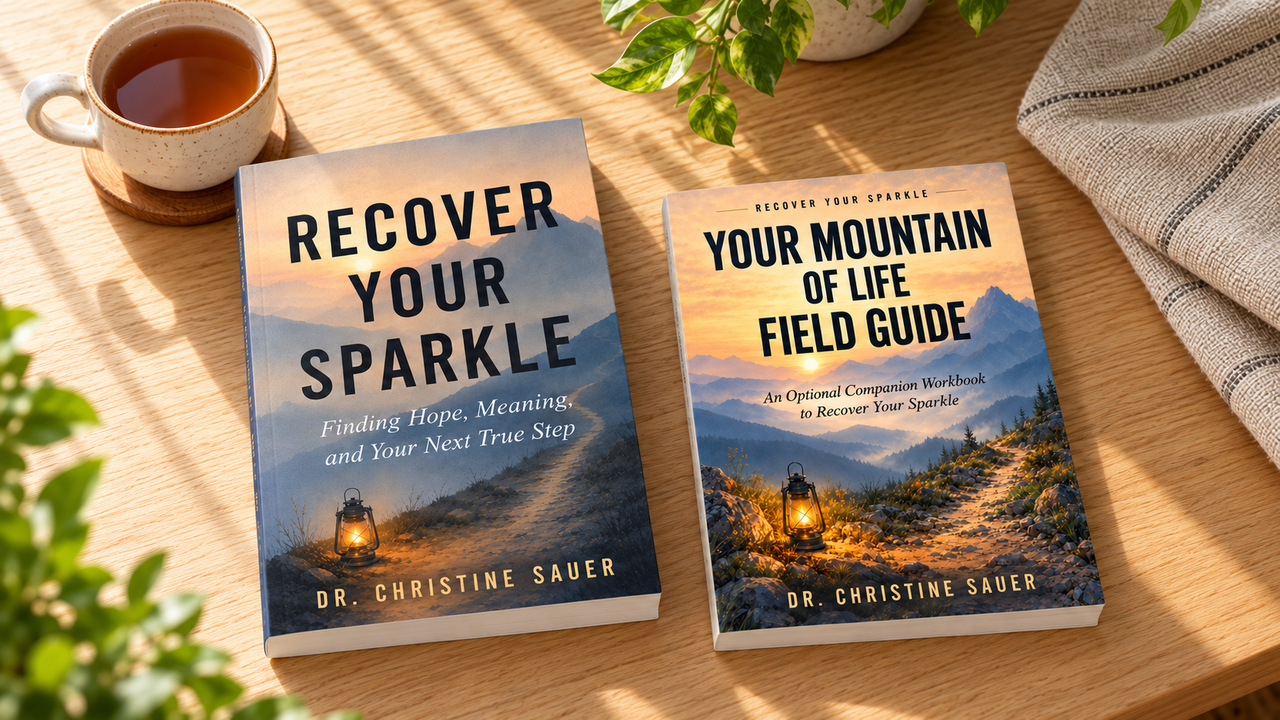
You see, my best book, "Recover Your Sparkle" existed for over 20 years (probably longer) in my mind and in broken pages in my drawer and later on my hard drive and in the cloud.
I used parts for my public talks, for video on my YouTube channel.
I tried to shape my thoughts, ideas and the maze I felt emerging in my mind into a coherent universe on paper, yet I just could not get it fully finished. And without AI, it may have never been published and went with me to my grave.
And now, at the time I am writing this blog post (November 2026), the final manuscript is written, the cover is picked and the companion guidebook is already available, the website is done, and I can see it soon getting out into the world to help others to recover their sparkle, which is the purpose of this book.
You can learn more about the Recover Your Sparkle book, listen to an audiobook sample, download the guidebook and get on the reader's list here.
Yet, without the help of AI, in my case ChatGPT, these books would have never been written.
What is AI?
AI (Artificial Intelligence) refers to software that can perform tasks such as working with language, recognizing patterns and generating content. It is still evolving, and I can't say I understand all about it. The writing tools discussed here use large language models (LLMs), AI software trained to work with language. LLM stands for "Large Language Model". And language is definitely its specialty. These tools have brought about a new era of word processing and computing and opened up many areas that are still being explored.
Us "old folks" still remember writing by hand on paper (how revolutionary), life without technology, without internet, computers, "smart" phones "smart" everything, and even without a TV. I started with a mechanical typewriter as a faster way to write...
And I sometimes yearn for these old times, as I feel that life felt calmer and maybe a bit slower then...
And as with all revolutionary new inventions, there is a discussion - and should be - whether this invention serves humans, or whether humans will in the end serve them or the structures that are built with their assistance. History will tell.
Can AI tell you whether you are writing a GOOD book?
In one word: No.
AI can tell you whether your spelling and grammar are correct for the language you are writing in. It can rapidly translate your writing in any language. It even can assess whether your structure is coherent - or where changes may help to guide the reader better.
But AI cannot judge whether your book is a GOOD book - it cannot know or critically appraise whether your content feels right to you, whether it will serve its purpose, move your readers or be commercially successful.
You can ask your AI tool to organize notes, suggest an outline, question a confusing passage or offer different ways to express an idea.
This is a wonderful use. And AI can write a draft manuscript, using all your notes, that you can then go through, sentence by sentence, word by word, and go back several times, and each time edit and shape with your human understanding, your human brain and mind. That you can and should read aloud, read again and again, until you feel that it is fully yours.
For my book Recover your Sparkle, I had parts of my writing from many years back available to use, yet I went sentence for sentence through my first AI-compiled draft manuscript - and I did this again, 9 times, while the book was taking shape, reading it aloud, changing the words to reflect what I wanted to express, while my AI thinking partner gave suggestions, and I often had to "step on its toes" to tell it that I did not like the result.
This blog post has been conceived the same way. My idea, my prompt (a prompt means just telling AI what you want), AI provided structure and a first draft, and now I am editing it, filling in my stories, my thoughts, my details.
Is an AI assisted book really YOUR book?
Well, if you are asking: Who is the Author? Is it AI or me? The answer is clear: You are the author.
That means you direct the book and remain responsible for its content. Copyright protection depends on your human creative contribution and the applicable law.
Let's get back to my example, the Recover Your Sparkle book and guide. I had the ideas, carried them with me for many years, dreamt of putting them together to a book, abandoned the dream when it didn't sound right, and now finally, with the help of AI, was able to assemble and shape all my stories, ideas, thoughts and parts into one coherent book and system. And I liked what we co-created. A lot.
Many people who use AI tools develop kind of a relationship to it. I gave mine a name, early on, called it "Chattie". I still do. Yet, I moved away from getting too close, as I am only too aware of the dangers and limitations of AI. But that's for another book...
To test whether AI was really useful, I read aloud parts of my book to my friends and neighbors, and when some of them had tears in their eyes and were visibly moved by the words we had conceived, I knew I was on the right track. This had never happened with one of my previous books.
I knew then that this book was becoming a GOOD book. A book I could be proud of.
A book that would serve people, maybe really help them to follow the path up their mountain of life. Whether that will ever happen, I don't know. We only control the input, and then release our "baby' to the world to make its impact.
I disclose the AI use in my book, which I believe is the honest thing to do.
But here is a caveat: I don't recommend writing your whole book just with AI. It is possible, as I have proven with my "4-hour book" above, and so did others, who did it even faster. But writing a book should not be a race for the fastest writing time. A book that is written close to 100% by AI will most often feel generic, lack emotional depth, and deserves exactly the name that is widely used for such books, the derogatory term "AI slop". (Not that there haven't been bad books written 100% by a sloppy human before...)
But please always know this:
When you use AI correctly, and I teach this in my writing with AI workshops, YOU are always in control: You make all the decisions for your book and you can make it uniquely yours and express what you want to say. You can and should decide what matters, what is true and what your reader needs.
So here are the 3 Parts of any GOOD book.
The 3 Important Parts of any GOOD Book
Your book needs these 3 important parts:
- a clear purpose,
- a structure that helps the reader follow along, and
- the writing itself, words and sentences you have thought about and made your own.
And for all 3 parts, AI can be a very useful thinking partner.
Part 1: Find the direction:
Give your book a clear purpose

Whether you use AI or not, always start by finding the purpose for your book.
When using AI, before asking AI to write anything, finish this sentence in your mind, on a screen or on paper.
If you need help, my book : "My Daily Sparkle of Goal Achievement" can help.
I am writing this book for ______, so they can understand, feel or experience ______.
Be specific enough that you can imagine a real reader.
“Everyone interested in leadership” leaves you with a very broad assignment.
“New managers who want to handle their first difficult conversation without avoiding it” gives you a much better starting point.
Then decide what belongs in this book and what can wait for another one. A short, focused book can serve its reader beautifully. You do not have to fit everything you know between two covers.
Try this AI prompt. Copy and paste the words below into your AI chatbot as instructions:
Replace the placeholders inside the brackets [] with your own words. A free account in ChatGPT or Claude will work just fine for this exercise.
Help me clarify a book idea. My intended reader is [describe them]. I want them to [understand, feel or experience this]. My relevant experience is [your real background]. Ask me five useful questions, one at a time, before suggesting a direction. Do not invent details about my experience.
The answers you give are part of the work. If the questions expose a gap, take time to think rather than asking AI to fill it with something that merely sounds convincing.
Part 2: Build the structure:
Turn scattered ideas into an outline

Once the direction is clearer, gather your notes, questions, examples and possible scenes. Ask AI to group them and suggest an order. Treat that outline as a proposal you can change.
For our new-manager example, a first outline might be:
- Recognize the conversation you are avoiding.
- Prepare the facts and decide what you want to understand.
- Open the conversation clearly and respectfully.
- Listen, respond and agree on a next step.
- Follow up and learn from what happened.
Now test it. Here are a few questions you could ask:
- Does the reader need something before chapter one?
- Are two chapters repeating each other?
- Where would a real example, exercise or explanation help?
- Where has AI added material outside your expertise?
Then you could follow-up in your AI tool with a prompt like this:
“For each chapter, tell me the reader’s main question and what they should leave with. Flag repetition, missing steps and anything that needs evidence.”
The shape changes with the kind of book you want to write:
- Nonfiction: organize the learning or practical journey. Check that your explanations and examples support the promise.
- Memoir: choose the experiences that serve the story you want to tell. An AI suggestion is not a memory; do not turn invented scenes or dialogue into claimed facts.
- Fiction: explore character choices, conflict, pacing and consequences. Keep the parts that fit your imagined world, and discard suggestions that make everyone sound the same.
If story structure is where you get stuck, my article on storytelling for wellness entrepreneurs offers another way to think about the journey a reader can follow.
Part 3: Make the writing yours:
improve the draft instead of "just" accepting it
A first draft gives you something to work with.
Read it aloud. Then ask yourself these questions:
- Does it sound like something you would say?
- Does it actually explain the point?
- Would your reader know what to do with it?
Here is an invented (fictional) teaching example:
Generic version: “Effective communication is essential for successful leadership. Leaders should foster open dialogue and create an environment of trust.”
More useful revision: “Before your next team meeting, choose one decision you have not made yet. Explain what task or topics are still open, ask for input from all team members, and tell people when you will make your decision. Afterwards, show them how your team member's input affected the outcome and improved the quality of the decision.”
The revision gives the reader something concrete. You may still want to change it, add a genuine example, or explain when it would not be appropriate.
Ask AI for criticism as well as wording:
- “Which part of this is vague?
- "What might my intended reader misunderstand?
- "Suggest three improvements and explain why, without rewriting the whole passage.”
Bring in your real experience, observations, humour and imagination where they belong. Keep a copy of your original writing so you can compare versions rather than losing the voice you started with.
Check what sounds convincing - Take a lesson from Santa
Take a lesson from Santa: Let AI help, then check the facts twice.
Before a passage earns its place in your book, check names, dates, quotations, research references and factual claims against reliable original sources or better two. Open the source and make sure it says what the passage claims. A confident answer from AI is not verification. From my own experience I must say that AI sometimes gives you answers that are flat-out wrong. And if you tell it, it will say: "You are right, I stated that incorrectly, the correct answer is [xxx]. (and I recommend checking it again, just like Santa recommends)
- Use stories about other people thoughtfully, and only with the appropriate permission and privacy protection.
- Do not upload confidential client information or someone else’s private material just to improve a draft.
- Check your right to use photographs, illustrations, quotations and other material (copyright infringement can become very costly).
- For specialist topics, arrange appropriate expert review rather than relying on AI to settle uncertain claims.
Keep a simple source list as you go. It is much easier to do it this way than trying to find and rediscover where a claim came from - after the manuscript is finished.
How to get from a draft to a book that people can (and want to) read
An outline and several good pages are progress. A finished book still needs further work:
- Revise the overall structure and remove unnecessary repetition.
- Get feedback from suitable readers and, where helpful, a professional editor.
- Check facts, permissions, consistency and proofreading.
- Prepare the cover, interior layout and files for your chosen publishing route.
- Review the book description, categories and publishing requirements, then check a proof before release.
If you plan to publish through Amazon KDP, read its current content guidelines, including its distinction between AI-generated and AI-assisted content. Its disclosure requirements depend on how you used AI. Amazon KDP asks publishers to disclose AI-generated text, images and translations, and distinguishes these from AI-assisted editing. Check the rules again when you are ready to publish as the laws and rules regarding AI use and copyright are currently being reviewed and may change
Give your book idea one manageable next step
You do not need to solve the entire project today. Write your purpose sentence. Sort one page of notes. Improve one passage. Then decide on the next small piece.
Join me for the Next Live Workshop: "How to Write a GOOD Book with AI"
Would you like to see this process worked through rather than trying to piece it together alone? Reserve your free Seat today.
You will learn a process you can apply to nonfiction, memoir or fiction. Completing or publishing an entire book is a separate project.
See the workshop details and save your free place. Bring the idea you keep returning to, or a passage where you got stuck.
I am looking forward to being your guide.